

Table of Contents
- Why Hydration Strategy Matters for 3-Hour Rides
- Understanding Your Cycling Sweat Rate Calculator
- How Much Water to Drink Cycling Per Hour
- How Much Sodium Per Hour Cycling
- Building Your Hour-by-Hour Hydration Plan for Long Bike Rides
- Personalizing Your Strategy: Temperature, Pace, and Body Size
- Avoiding Overhydration and GI Distress
- Frequently Asked Questions
Last Updated: October 14, 2026
Why Hydration Strategy Matters for 3-Hour Rides
A proper hydration strategy for 3 hour bike rides means replacing what your body loses before performance drops.
Three hours is the inflection point where casual sipping stops working: your muscles need fuel, your core needs cooling, and your sodium needs active management.
Dehydration degrades power output, slows your thinking, and increases injury risk. A dialed hydration strategy for 3 hour bike rides keeps heart rate stable, maintains mental clarity, and lets you push harder in the final miles.
Understanding Your Cycling Sweat Rate Calculator
Your sweat rate is the foundation of everything that follows: a measurable number unique to your body, effort level, and environment. Knowing it lets you dial in exactly how much fluid you need per hour.
The Simple Sweat Rate Test
The test takes 30 minutes and requires only a scale, a dry shirt, and a known effort level.
Weigh yourself nude before riding. Ride exactly 30 minutes at the intensity you'll maintain during your 3-hour ride, in the same clothing.
Your weight loss in 30 minutes, multiplied by two, equals your hourly sweat rate in pounds.
Add back any fluid you drank during the 30 minutes.
Adjusting for Temperature and Effort
Your test is only valid for the conditions you tested in.
Effort level also matters: climbing at threshold produces more sweat than steady-state riding on flat terrain.
Humidity compounds both factors: it prevents sweat from evaporating efficiently, so your body produces even more sweat to cool itself.
Test in conditions as close as possible to what you'll face; otherwise test in moderate conditions and adjust upward for heat and humidity, or downward for cool weather.
How Much Water to Drink Cycling Per Hour
Your sweat rate tells you total fluid loss, but replace only roughly 80 percent of it. Replacing more increases the risk of overhydration and GI distress.
If your sweat rate is 1,500 milliliters per hour, aim for 1,200 milliliters of intake per hour, or roughly 3,600 milliliters (120 ounces) across a 3-hour ride.
Distribute intake evenly: drink 400 milliliters every 20 minutes rather than 1,200 every hour.
Most cyclists underestimate their needs.
How Much Sodium Per Hour Cycling
Sodium drives fluid absorption in your gut and maintains blood volume during exercise.
The general target is 300-600 milligrams of sodium per hour for most cyclists on 3-hour efforts, depending on sweat rate, heat acclimatization, and individual sensitivity.
Start at 400 milligrams per hour and adjust: bloating or heavy legs the next day suggests too much sodium, while feeling flat or cramping during the ride suggests you need more.
SGLT1 Transport and Salt-Glucose Balance
SGLT1 is a transporter protein in your small intestine that actively absorbs glucose and sodium together.
The key is balance: too much glucose without enough sodium overwhelms the SGLT1 pathway and causes gut distress, while too much sodium without glucose wastes the sodium and provides no muscle fuel.
Most electrolyte formulas either ignore this mechanism or use it as marketing language without dialing in the ratio. Dialed Hydration's Engineered Electrolytes are built around SGLT1 transport, combining a fast-absorbing dextrose base with a precise salt-to-glucose balance.

Comparing Salt Content Across Formulas
Electrolyte products take wildly different approaches to sodium dosing, from 200 milligrams per serving to 1,000 or more. Understanding what you're actually getting matters when building a 3-hour hydration strategy.
A typical mainstream electrolyte packet contains 200-300 milligrams of sodium per serving, often paired with 4-6 grams of carbohydrate.
LMNT delivers 1,000 milligrams of sodium per packet but only 2 grams of carbohydrate.
Dialed Hydration's approach is different.
Building Your Hour-by-Hour Hydration Plan for Long Bike Rides
A 3-hour ride breaks into three phases: hour one establishes baseline hydration and fuel, hour two maintains the rhythm, and hour three is where most cyclists falter.
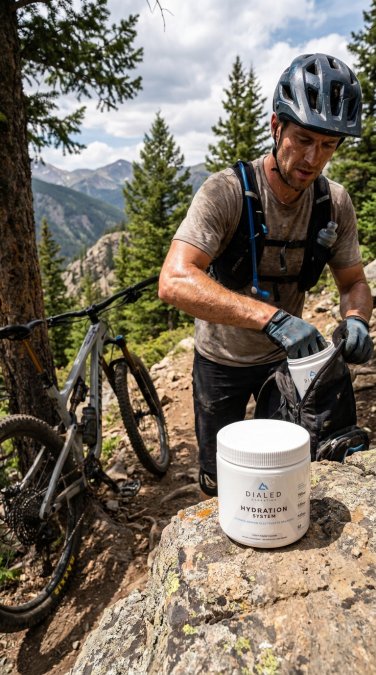
Pre-Ride: 2-4 Hours Before
Start your ride already well-hydrated. Drink 400-600 milliliters of fluid 2-4 hours before you start, giving your kidneys time to regulate fluid balance.
A simple approach: mix one serving of Dialed Hydration's Engineered Electrolytes into 500 milliliters of water two hours before your ride, so the sodium and minerals aid fluid retention and you start properly hydrated.
Avoid large meals within two hours of riding; a light snack 60-90 minutes before is fine.
Hour 1: Establish Your Baseline
Your first hour sets the tone. Drink 200-250 milliliters every 15 minutes, roughly 800-1,000 milliliters total, slightly less than your calculated sweat rate because your body is still cool and your gut is fresh.
If you're using an electrolyte formula, establish the pattern now: mix one serving of Dialed Hydration into your bottle. The SGLT1-optimized formula starts active carbohydrate and sodium absorption immediately.
If your stomach feels sloshy, reduce intake slightly. Most cyclists tolerate 800-1,000 milliliters per hour once adapted to drinking while riding.
Hour 2: Maintain Steady Intake
This is the hour where most cyclists drift: settled into a rhythm, not thirsty, forgetting to drink. Be most disciplined here.
Increase to your target intake: 1,000-1,200 milliliters per hour, or 80 percent of your measured sweat rate.
Refill bottles now while you still have energy to stop safely, and carry two full bottles into hour three if possible.
Hour 3: Adjust for Fatigue and Conditions
Your third hour determines whether you finish strong or fade.
If conditions are hotter or more humid, increase to 250-300 milliliters every 15 minutes. If you're climbing, prioritize hydration over speed on the final climbs.
Watch for overhydration signs: nausea, bloating, stomach heaviness, or sloshing. If any appear, reduce intake by 25 percent and dial back sodium slightly.
Post-Ride Rehydration
Rehydration doesn't end at the finish. Your body keeps losing fluid through sweat for 30-60 minutes after you stop, and active rehydration in this window accelerates recovery.
Drink 150 percent of the fluid you lost over the next 4-6 hours: if you lost 2 pounds (roughly 900 milliliters), drink 1,350 milliliters.
A practical approach: mix one serving of Dialed Hydration into 500 milliliters of water immediately after finishing, then another serving within 2-3 hours.
Personalizing Your Strategy: Temperature, Pace, and Body Size
Your sweat rate test gave you a baseline, but three variables demand real-time adjustment: ambient temperature, riding pace, and body weight.
Hot Weather Adjustments
Increase hourly fluid intake by 25-50 percent in heat: a 1,000 milliliter per hour baseline becomes 1,250-1,500, making multiple bottles or a planned refill essential.
Increase sodium proportionally: aim for 500-600 milligrams per hour, the higher end of the 300-600 range.
Start hydrating earlier in heat: drink 200 milliliters every 15 minutes from the start, before thirst hits.
Cool Weather Considerations
Cool conditions reduce sweat rate significantly: a 20-degree drop from test conditions might cut sweat loss by 25-30 percent.
In cool conditions, aim for 60-70 percent of your measured sweat rate rather than 80 percent: a 1,500 milliliter per hour baseline becomes 900-1,050 milliliters per hour.
Sodium needs don't decrease proportionally: even in cool conditions, aim for 300-400 milligrams per hour.
Intensity and Body Weight Factors
Climbing and hard efforts increase sweat rate: a mostly-climbing 3-hour ride produces more sweat than a flat one at the same average speed.
Body weight matters too: larger athletes produce more absolute sweat volume, so a 180-pound cyclist typically sweats more than a 140-pound cyclist at the same intensity and temperature.
A lighter athlete needs less total fluid but still needs adequate sodium.
Avoiding Overhydration and GI Distress
Overhydration is rare but serious: drinking too much fluid without adequate sodium causes hyponatremia, dangerously low blood sodium.
Most cyclists can absorb roughly 1,000 milliliters of fluid per hour when properly trained.
GI distress usually comes from too much fluid volume, inadequate sodium, or carbohydrate overload. If your formula has excessive carbohydrate, switch to one with a lower carb-to-sodium ratio, which delivers efficient absorption through SGLT1 transport.
Practice your hydration strategy on training rides, not race day.
Dialed Hydration's Engineered Electrolytes support efficient SGLT1-mediated absorption with a precise salt-to-glucose balance designed for real sweat loss.
Frequently Asked Questions
How often should I drink during a 3-hour bike ride?
Drink at regular intervals every 15-20 minutes, taking small sips rather than large gulps. This approach prevents stomach sloshing and allows your body to absorb fluid steadily. A typical hydration strategy for a 3-hour ride involves consuming 500-750 ml (17-25 oz) per hour, spread across four to five drinking sessions each hour. Consistency matters more than the exact timing, establish a rhythm early in your ride and maintain it.
What is the best way to estimate my cycling sweat rate?
Weigh yourself nude before a 1-hour ride at your typical intensity and conditions. Drink a measured amount of fluid during the ride (record it). Weigh yourself again immediately after. Your sweat rate equals your weight loss plus fluid consumed, minus any urine output. For example, if you lost 1.5 lbs and drank 500 ml, your sweat rate is roughly 1 liter per hour. Test this on multiple rides in different temperatures to find your average.
How much sodium should I take per hour on a bike ride?
Most cyclists benefit from 300-600 mg of sodium per hour during rides lasting 2-3 hours. This range supports fluid retention and helps prevent hyponatremia (dangerously low blood sodium). Your exact need depends on sweat rate and sodium losses. Dialed Hydration's Engineered Electrolytes formula delivers a precise salt-to-glucose balance that supports SGLT1 transport, ensuring efficient sodium absorption without excess. Start at the lower end and adjust based on how you feel and your sweat rate test results.
Should I drink electrolytes or plain water on a 3-hour bike ride?
Electrolyte drinks are superior for rides lasting 2+ hours. Plain water alone does not replace sodium lost through sweat, which can impair performance and increase cramping risk. Electrolyte drinks with a balanced salt-to-glucose ratio support fluid absorption through SGLT1 co-transport in your intestines, allowing your body to retain more of what you drink. This is especially important during longer rides where maintaining fluid balance directly affects endurance and power output.
How do I know if I am drinking too much or too little during a ride?
Too little: you feel thirsty, your mouth is dry, urine is dark after the ride, or you lose more than 2% of your body weight. Too much: you feel bloated, experience nausea, or notice swelling in your hands and feet. Aim to lose no more than 2% of your pre-ride body weight, for a 150 lb rider, that is 3 lbs. If you finish a 3-hour ride having lost less than 2% of your weight and feel strong, your hydration strategy worked. Adjust your fluid and electrolyte intake based on these signals.
How should I adjust my hydration strategy for hot or humid weather?
In hot or humid conditions, increase your fluid intake by 150-250 ml (5-8 oz) per hour and raise sodium intake to the higher end of your range (500-600 mg per hour). Sweat rate increases significantly in heat, so test your sweat rate specifically in the conditions you will race or train in. Drink more frequently in smaller amounts to manage stomach comfort. Start hydrating earlier in the ride before thirst signals intensify, and consider pre-cooling strategies like cold fluids before the ride begins.
What should I drink before and after a 3-hour bike ride?
Before: drink 400-600 ml (14-20 oz) of fluid 2-3 hours before your ride, then another 200-300 ml (7-10 oz) about 15-20 minutes before starting. This pre-ride hydration ensures you start well-hydrated without sloshing during the opening minutes. After: consume 150% of the weight you lost during the ride over the next 4-6 hours (if you lost 2 lbs, drink roughly 48 oz of fluid). Include electrolytes and carbohydrates in your post-ride drink to speed recovery and replenish glycogen stores.
Why does dextrose matter in an electrolyte drink for cycling?
Dextrose enables SGLT1 co-transport in your small intestine, a mechanism that allows sodium and glucose to be absorbed together more efficiently than either can be absorbed alone. This dual absorption pathway increases the amount of fluid your body retains, directly improving hydration during endurance efforts. Dialed Hydration uses less than 1g of dextrose per serving, just enough to activate SGLT1 transport without excess calories or the crash associated with high-carbohydrate drinks. This precision dosing supports sustained performance on 3-hour rides without energy spikes or crashes.