

Table of Contents
- What Bonking Is and Why It Ends Your Workout
- Signs of Bonking During Exercise You Should Never Ignore
- Carbohydrate Intake During Endurance Exercise: How Much and When
- What to Eat Before a Long Run to Start With Full Stores
- Hydration, Electrolytes, and SGLT1: The Absorption Piece Most Athletes Miss
- A Practical Timed Fueling Plan to Avoid Bonking
- Bonking vs. Dehydration and Heat Illness: Telling Them Apart
- Recovery After Bonking and Prevention for Your Next Event
- Frequently Asked Questions
Last Updated: October 7, 2026
What Bonking Is and Why It Ends Your Workout
Bonking is the sudden collapse of energy that happens when your body runs out of usable carbohydrate during long exercise. It is not the same as ordinary tiredness.
Here is the simplest way to think about it. Your muscles run on two fuels: glycogen and fat. Fat is slow to convert. Glycogen is fast, and it is limited.
That is the whole problem in one line. Glycogen depletion is the main cause of bonking.
So the goal is clear: start with full stores, then top them up as you go. That is how you avoid bonking during exercise, and it is what this guide covers step by step.
Signs of Bonking During Exercise You Should Never Ignore
The signs of bonking during exercise usually build in a clear order. Catching them early gives you time to act.
Watch for these warnings:
- Heavy legs that feel suddenly weak
- A drop in pace you cannot push through
- Lightheadedness or dizziness
- Shakiness in your hands
- Confusion or trouble doing simple math
- A sudden low mood or irritability
- Cold sweat and pale skin
The first few signs are your window. Take in carbohydrate at the first hint of heaviness. If you wait for confusion, you have already lost the workout.
Most athletes describe it as a hunger flat or hunger knock. The name fits. Your body is asking for fuel, and it is asking loudly.
Carbohydrate Intake During Endurance Exercise: How Much and When
Carbohydrate intake during endurance exercise is the single biggest lever you control. The general range is 30 to 90 grams of carbohydrate per hour, adjusted for how long and how hard you go.
Here is a simple guide:
| Session Length | Carbs Per Hour | Best Approach |
|---|---|---|
| Under 60 min | Not needed | Water and electrolytes |
| 1-2 hours | 30-60 g | Gel, chews, or a drink mix |
| 2-3 hours | 60-90 g | Mix of gel and solid food |
| 3+ hours | 60-90 g | Timed plan, tested in training |
Start fueling early. The first intake should land around 20 to 30 minutes in, not at the two-hour mark.
Timing matters more than total. Small doses every 15 to 20 minutes beat one large dose. Your gut can only absorb so much at once.
How Much Carbohydrate Per Hour for Cycling
How much carbohydrate per hour for cycling depends on intensity. Easy spins need less. Hard efforts and long rides need more.
For a steady ride under two hours, aim for 30 to 60 grams per hour. For a race or a long day in the saddle, push toward 60 to 90 grams per hour.
Cycling makes this easier than running. You can carry more, eat on the move, and your stomach stays calmer on the bike. Use that advantage.
Test your plan on training rides first. Never try a new fueling amount on race day.
What to Eat Before a Long Run to Start With Full Stores
What to eat before a long run decides how much fuel you have at the start. A full tank delays the point where you risk bonking.
Eat a carbohydrate-focused meal two to three hours before you run. Keep it low in fat and fiber so it empties fast.
Good options include:
- Oatmeal with a banana
- Toast with a small amount of nut butter
- White rice with a light protein
- A bagel with a thin spread
If you run early, a smaller snack 30 to 60 minutes out works well. Try a banana or a small energy bar.
Hydration starts here too. Drink 16 to 20 ounces in the hours before you run. Add an electrolyte mix if you sweat heavily or it is hot.
Hydration, Electrolytes, and SGLT1: The Absorption Piece Most Athletes Miss
Hydration and electrolytes decide how well your fuel gets absorbed. This is the part most athletes skip, and it costs them.
SGLT1 is a transport protein in the lining of your small intestine. It pulls sodium and glucose into the bloodstream together, and water follows. Think of it as a tiny doorway that only opens when sodium and glucose arrive at the same time. Get that pairing right and fluid moves fast. Get it wrong and fluid sits in your gut.
That is why a small amount of glucose helps you absorb salt and water. It is the same principle behind oral rehydration solutions used in medicine.
How SGLT1 Changes the Salt-to-Glucose Ratio
The ratio matters more than the total. A drink with a lot of sodium but no glucose to pair with it cannot use the SGLT1 doorway efficiently.
This is where formulas diverge sharply:
| Brand | Sodium Per Serving | Glucose/Dextrose Base | SGLT1 Pairing |
|---|---|---|---|
| LMNT | High sodium per stick | No meaningful glucose base | Sodium-heavy, weak glucose pairing |
| Liquid IV | Moderate sodium | Larger glucose load | Pairs, but with more sugar per serving |
| Dialed Hydration | Dosed for real sweat loss | Under 1 g dextrose per serving | Precise salt-to-glucose balance |
LMNT leans hard on sodium and skips a meaningful glucose base, so it hydrates but does not fully engage the SGLT1 doorway.
Salt content is where formulas differ most. Some brands push very high sodium per serving, which works for some athletes and overwhelms others.
If you have a sensitive stomach, this balance matters. Too much of either component in a drink pulls water into the gut and causes cramps. A precise ratio keeps fluid moving the right way.
NIH overview of oral rehydration therapy and sodium-glucose transport
A Practical Timed Fueling Plan to Avoid Bonking
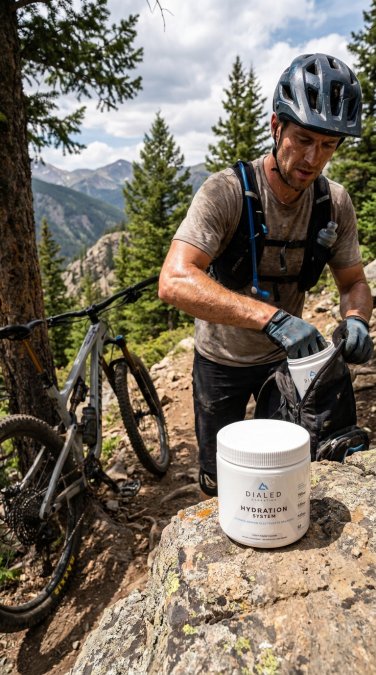
A timed fueling plan turns all of this into action. Set alarms if you have to. Do not trust feel alone, because feel fades as you tire.
The Base Plan for a 3-Hour Session
- 3 hours before: Eat a carb-rich meal, 100 to 150 grams of carbs.
- 30 minutes before: Drink 16 ounces of water with electrolytes.
- 0-20 minutes in: Take your first 20 to 30 grams of carbs.
- Every 15-20 minutes: Take another small dose of carbs.
- Every hour: Drink 16 to 24 ounces of fluid with electrolytes.
- Last 30 minutes: Keep fueling if the effort continues.
- After: Refuel with carbs and protein within 30 minutes.
Adjusting the Plan by Sport
Running. Carrying fuel is the hard part. A handheld bottle with a pouch, a waist belt, or a vest all work. Take smaller, more frequent doses because jostling upsets the stomach more than cycling does.
Cycling. You can carry more and eat on the move. Your stomach stays calmer on the bike, so you can tolerate larger doses. Use that advantage and push toward the higher end of the range on long rides.
Hiking. Effort is lower, so carb needs drop. Aim for 30 to 45 grams per hour and lean on solid food, which sits better at low intensity.
Adjusting the Plan by Environment
Heat. Fluid and sodium needs climb. Add 8 to 16 ounces of fluid per hour and increase sodium intake. Watch for the signs of dehydration covered in the next section.
Cold. You sweat less but still lose fluid. Athletes often under-drink in the cold because thirst is blunted. Set a timer and drink on schedule anyway.
How to Carry and Consume Fuel
- Vest or belt: Best for running. Keeps hands free and fuel within reach.
- Frame bag or jersey pockets: Best for cycling. Easy access without stopping.
- Bottle with a pouch: Good for shorter efforts. Limits how much you can carry.
Practice reaching for fuel while moving. Fumbling with wrappers at race pace wastes time and raises your heart rate.
Adjust the amounts for heat, intensity, and your own sweat rate. A hot day means more fluid and more sodium.
Bonking vs. Dehydration and Heat Illness: Telling Them Apart
Bonking and dehydration feel similar, but they need different fixes. Getting the cause wrong makes things worse.
Bonking comes on fast and responds to carbohydrate. You feel weak, shaky, and confused, but your core temperature is normal.
Dehydration builds slowly. You get a dry mouth, dark urine, and a rising heart rate at the same pace. It responds to fluid, not food.
Heat illness is the most serious. Watch for hot skin, a stop in sweating, nausea, and confusion. Stop and cool down right away. Seek medical help if symptoms do not improve.
Here is a quick way to tell them apart:
| Signal | Bonking | Dehydration | Heat Illness |
|---|---|---|---|
| Onset | Sudden | Gradual | Gradual to sudden |
| Core temp | Normal | Slightly high | High |
| Sweating | Normal | Reduced | May stop |
| Fix | Carbs | Fluid | Cool down, medical help |
If you are unsure, treat for both. Take in carbs and fluid, and get out of the heat.
Recovery After Bonking and Prevention for Your Next Event
Recovery after bonking starts the moment you stop. Eat 1 to 1.2 grams of carbs per kilogram of body weight within 30 minutes. Add protein to help repair muscle.
Then rest. A full bonk can leave you drained for a day or more. Do not schedule a hard session right after.
Prevention for your next event comes down to a few habits:
- Practice your fueling plan in training, not on race day
- Start with full glycogen stores
- Fuel early and often
- Match fluid and sodium to the conditions
- Carry a backup source of carbs
The athletes who never bonk are not tougher. They just plan better. A tested plan removes the guesswork.
At Dialed Hydration, we make the hydration half of that plan simple. Our Engineered Electrolytes use Himalayan pink salt and sea salt, magnesium from Aquamin, and chelated potassium and calcium, all with clearly listed ingredients and no fillers. One scoop in water gives you the salt-to-glucose balance your gut needs to absorb fluid fast.

ACSM position stand on nutrition and athletic performance
Frequently Asked Questions
What does bonking feel like during exercise?
Bonking feels like a sudden wall: heavy legs, dizziness, confusion, weakness, and a desperate urge to stop. Unlike ordinary fatigue that builds gradually, bonking hits when blood glucose and glycogen stores drop too low to sustain effort. Runners describe it as hunger flat or hunger knock; cyclists call it hitting the wall. If you feel shaky, disoriented, or unable to hold pace despite wanting to continue, you are likely bonking and need fast-absorbing carbohydrate plus fluids immediately.
How much carbohydrate per hour should I take to avoid bonking?
For sessions lasting 1-2.5 hours, aim for 30-60 grams of carbohydrate per hour. Beyond 2.5 hours, target 60-90 grams per hour, ideally from a mix of glucose and fructose sources. Cyclists often tolerate the higher end; runners may need to start lower and build tolerance. Pair carbohydrate intake with fluid and electrolytes, since sodium supports absorption. Test your exact hourly target during training, not on race day.
How long can you run before bonking?
Most athletes have enough glycogen for roughly 90-120 minutes of moderate to hard running before stores run low. That window shrinks with higher intensity, heat, or poor pre-run fueling. Start a long run with full glycogen stores by eating a carbohydrate-rich meal 2-3 hours before, then take 30-60 grams of carbohydrate per hour during the run. Fueling early, before you feel depleted, is the single most reliable way to avoid bonking.
What is the SGLT1 mechanism and why does it matter for hydration?
SGLT1 is a transporter in your small intestine that pulls sodium and glucose into the bloodstream together. When a drink has the right salt-to-glucose balance, SGLT1 moves water faster, so you absorb more of what you drink. Formulas built around this mechanism, like Dialed Hydration's Engineered Electrolytes with less than 1g of dextrose per serving, support efficient hydration without loading you with excess carbohydrate. Pairing a small amount of dextrose with a full-spectrum electrolyte blend helps your body absorb sodium and fluid more effectively during long efforts.
Bonking is preventable, and it comes down to fuel, fluid, and timing. Build a plan, test it in training, and carry the right electrolytes to make absorption work. Get started with Dialed Hydration and fuel your next event with a formula built for real sweat loss and efficient hydration.