

Last Updated: October 30, 2026
Quick Summary
Choose an electrolyte powder for strength training by reading the sodium amount per serving first, then checking mineral forms and carbohydrate source. A small dextrose fraction supports SGLT1 absorption, and you should match your dose to session length and sweat rate.
- Sodium governs blood plasma volume and is the mineral most powders underdose.
- Read the label in order: sodium amount, mineral forms, carbohydrate source, then everything else.
- Mix one serving in 500 milliliters of water 30 to 45 minutes before your first working set.
- Sessions under 60 minutes in a cool gym can use plain water instead of electrolytes.
- Estimate sweat rate by weighing yourself before and after a session with a towel.
Table of Contents
- Why Electrolyte Powder Belongs in Your Gym Bag
- Sodium in Electrolyte Powder: The Mineral That Decides Your Session
- Electrolyte Powder Ingredients: What to Look For and What to Skip
- SGLT1 Electrolyte Absorption: Why the Salt-to-Glucose Ratio Matters
- Electrolytes for Weightlifting: Building a Practical Protocol
- When Water Is Enough and When Electrolytes Earn Their Place
- Estimating Your Sweat Rate and Matching Your Dose
- Mix Your First Serving Before Your Next Heavy Day
- Frequently Asked Questions
Why Electrolyte Powder Belongs in Your Gym Bag
Electrolyte powder for strength training is a concentrated blend of sodium, potassium, magnesium and calcium that replaces the minerals lost in sweat during lifting sessions. At Dialed Hydration, we build ours around a specific absorption mechanism. Here is the uncomfortable truth most supplement guides skip: a hard set of squats and a long hike deplete your body the same way. They both cost you salt, and salt is what holds your blood volume steady under load.
Strength training is often treated as a water-only activity. That framing breaks down the moment you train in a hot garage, lift for ninety minutes, or stack a heavy session on top of a long day outdoors. Sweat loss is sweat loss. Replace it or pay for it in the last few sets.
Below, we explain how to read a label, dose by sweat rate, and decide when water is genuinely enough.
Sodium in Electrolyte Powder: The Mineral That Decides Your Session
Sodium is the electrolyte that governs your blood plasma volume, and it is the one most powders underdose. Sodium helps hold water in your bloodstream.
Potassium and magnesium matter, but they play supporting roles.
A common mistake is buying on taste. A powder that tastes pleasantly salty may still deliver a fraction of what you lose in an hour of hard training. Read the sodium number per serving first, then everything else. For a deeper breakdown of sodium and absorption criteria, see our guide to electrolyte powder for athletes.
Electrolyte Powder Ingredients: What to Look For and What to Skip
Read the ingredient panel in this order: sodium amount, mineral forms, carbohydrate source, then everything else. That sequence tells you more than the front of the tub ever will.
- Sodium source. Look for a named salt, not a generic "electrolyte blend." We use a Himalayan pink salt and sea salt blend so the mineral content is identifiable.
- Magnesium form. Aquamin, a marine-derived magnesium, is the magnesium form in Engineered Electrolytes.
- Potassium and calcium. Engineered Electrolytes uses chelated potassium and calcium.
- Carbohydrate. A small amount of glucose or dextrose is functional, not filler. It drives absorption. We cover why below.
- Fillers and mystery blends. Proprietary blends let a brand hide underdosing. Skip them.
If you are comparing formulas side by side, our buyer's guide to precision electrolyte formulas walks through the evaluation criteria in more detail.
SGLT1 Electrolyte Absorption: Why the Salt-to-Glucose Ratio Matters
SGLT1 is a transport protein in your small intestine that pulls sodium and glucose across the gut wall together. Think of it as a turnstile that only opens when both sodium and glucose show up at the same time. Get the ratio right and water follows the sodium into your bloodstream fast. Get it wrong and the salt sits in your gut.
A small carbohydrate fraction in an electrolyte powder supports SGLT1 transport.
Engineered Electrolytes is dosed with less than 1g of dextrose per serving to support SGLT1 transport.
For the full mechanism, read our explainer on SGLT1 salt-glucose co-transport.
Electrolytes for Weightlifting: Building a Practical Protocol
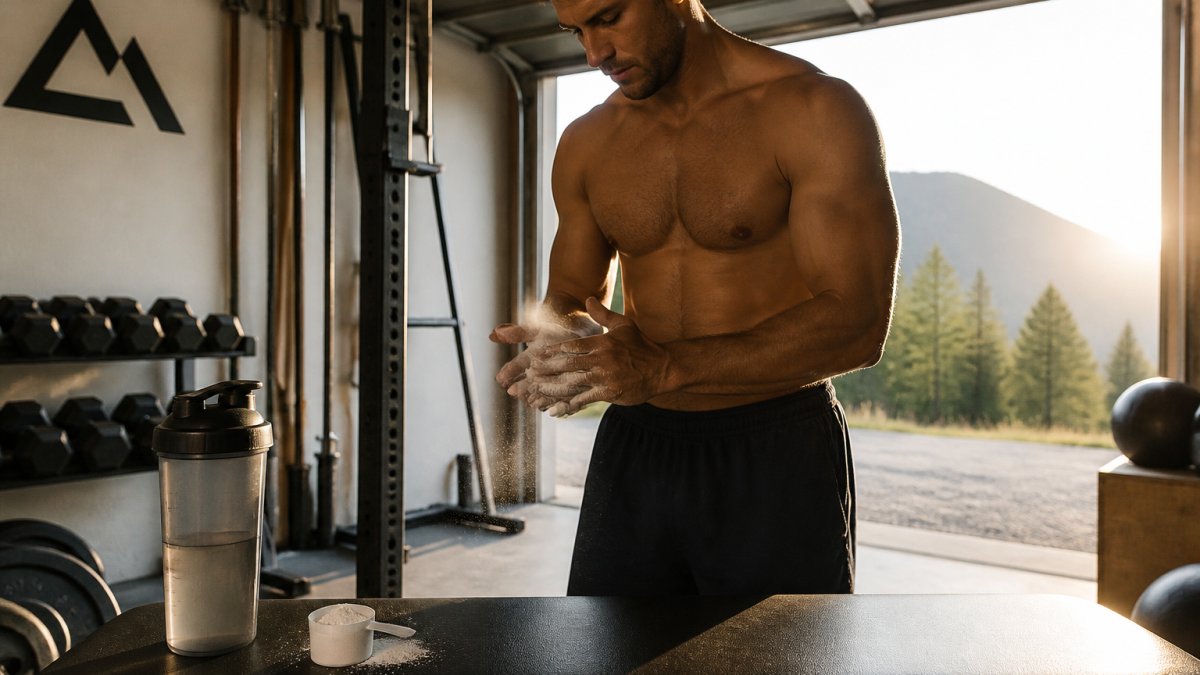
Electrolytes for weightlifting can be mixed before a session and matched to session length. But strength training has its own rhythm, rest periods, heavy sets, and often a hot garage gym, that calls for a more specific approach than the endurance advice you typically see.
Here is a practical protocol we recommend, built around the realities of lifting:
- Pre-session (30-45 minutes out). Mix one serving in 500 milliliters of water and drink it before your first working set. This tops off blood plasma volume so your first heavy set doesn't cost you more than it should. If you train early in the morning, drink it while you warm up.
- During the session. For sessions under 60 minutes in a cool gym, sip plain water as needed. Past 60 minutes, or if you're in a hot garage or training outside, keep the electrolyte bottle nearby and take a few ounces between sets. The goal is not to chug, it's to replace what you're losing in real time. During long rest periods (3-5 minutes between heavy sets), a few sips help maintain plasma volume without sloshing in your stomach.
- Post-session. One serving with your post-training meal to replace what the session cost you. If you're training fasted or in a hurry, this is especially important because you won't get electrolytes from food immediately.
- Back-to-back days. Increase the dose on the second day, when you start the session already partially depleted. A common pattern is to add half a scoop to your pre-session bottle on day two of a heavy block.
Adjusting for heat and sweat rate. A heavy squat day in a warm gym is a sweat event, treat it like one. If you're training in a hot garage or outside in summer, you may need up to two servings during a 90-minute session. A good field test: if your shirt shows salt rings after a session, you're a salty sweater and should lean toward the higher end of the dose range.
Backcountry strength training. For backcountry athletes, skiers, hikers, mountaineers, strength training often happens in a gym but supports long days far from resupply. The protocol above still applies, but the stakes are higher: you're not just optimizing a gym session, you're building the capacity to carry a pack and move safely in the backcountry. In that context, consistent electrolyte use during training helps you understand your sweat rate and sodium needs before you're hours from the trailhead. A mountaineer who learns their sweat rate in the gym can plan hydration for a long approach day with more confidence.
The mistake most lifters make is treating electrolytes as an endurance-only product. A heavy squat day in a warm gym is a sweat event. Treat it like one, and if you train for the backcountry, treat it as preparation for the days when resupply isn't an option.
Here is the practical protocol we recommend, built around the realities of lifting.
| Timing | What to do | Note |
|---|---|---|
| Pre-session (30-45 minutes out) | Mix one serving in 500 milliliters of water | Tops off blood plasma volume |
| During session, under 60 minutes, cool gym | Sip plain water as needed | Electrolytes not required |
| During session, past 60 minutes or heat | Keep electrolyte bottle nearby, few ounces between sets | Up to two servings in a 90-minute session |
| Long rest periods (3-5 minutes) | A few sips | Maintains plasma volume without sloshing |
| Post-session | One serving with post-training meal | Especially important if training fasted |
| Back-to-back days | Add half a scoop to pre-session bottle on day two | Start already partially depleted |
When Water Is Enough and When Electrolytes Earn Their Place
Water is enough for sessions under roughly an hour in mild conditions, when you start hydrated and eat a normal diet. That covers a lot of gym time. We will not pretend otherwise.
Electrolytes earn their place when one of these is true:
- Your session runs past an hour, or you are training in heat.
- You sweat heavily and see salt stains on your shirt or hat.
- You are training twice in a day, or on consecutive days.
- You are in the backcountry, where you cannot simply drink more and eat a banana.
- You notice cramping, unusual fatigue, or a flat feeling in later sets.
The backcountry case is the strongest. A trail athlete or mountaineer hours from resupply has limited water and limited food. A powder that delivers sodium with an absorption mechanism behind it does more work per liter than plain water can.
Estimating Your Sweat Rate and Matching Your Dose
You can estimate sweat rate at home with a scale and a towel. Weigh yourself dry before a session, train as normal, towel off, and weigh yourself again. Every kilogram lost is roughly a liter of fluid. Add back what you drank during the session to get your hourly loss. For example, if you lose 1.2 kilograms and drank 500 milliliters, your sweat loss is about 1.7 liters for the session. Divide by the session length in hours to get your hourly rate.
A rough field method works too. If your shirt shows visible salt rings after a session, you are a salty sweater and should lean toward a higher-sodium serving. If you finish a hard session without much sweat at all, you need less. But field signs are just a starting point, the scale method gives you a number you can act on.
Matching dose to sweat rate. Once you know your hourly sweat loss, you can match your sodium intake. A liter-per-hour sweater needs more sodium per bottle than someone losing half that. As a starting point, most electrolyte powders deliver between 200 and 1,000 milligrams of sodium per serving. If you're losing a liter per hour and using a powder with 500 milligrams of sodium per serving, you may need two servings per liter to replace what you're losing. Our guide on how much salt per hour during exercise breaks the math down with worked examples.
Backcountry considerations. For backcountry athletes, skiers, hikers, mountaineers, trail runners, sweat-rate estimation is not just a gym optimization; it's a safety skill. Far from resupply, you can't simply drink more or eat a banana. You need to know how much fluid and sodium you lose per hour so you can plan how much to carry. A common pattern is to estimate sweat rate during training and then add a buffer for altitude, dry air, and cold-weather exertion, all of which can increase fluid loss in ways that are easy to miss.
Watch out: chasing a huge sodium number without drinking enough water concentrates your intake and can leave you feeling worse, not better. Sodium and fluid go together. In the backcountry, that means carrying enough water to match your sodium intake, or using a powder that is formulated to be absorbed efficiently with the water you have. That's where the SGLT1 mechanism matters: a small amount of dextrose helps pull sodium and water into your bloodstream faster, which is especially valuable when you're limited on how much you can carry.
Mix Your First Serving Before Your Next Heavy Day
Engineered Electrolytes combines a Himalayan pink salt and sea salt blend, Aquamin magnesium, chelated potassium and calcium, and dextrose for SGLT1 absorption.

Frequently Asked Questions
Do you need electrolytes for strength training?
Not every session, but heavy or long lifting in a warm gym produces real sweat losses, and sweat carries sodium, potassium, and magnesium out with it. If you train more than 60 minutes, sweat heavily, or lift in heat, an electrolyte powder with meaningful sodium helps replace what you lose. For a 30-minute accessory session in a cool gym, water is usually fine.
How much sodium should I take during a strength-training workout?
Sweat sodium concentration varies widely between people, so there is no single number. A practical starting point is to check the label for sodium content per serving and compare it to how salty your skin and clothes feel after training. Heavier, saltier sweaters generally need more.
What is the difference between electrolyte powders for lifting and endurance training?
Match the formula to your session length and sweat rate.
Can electrolyte powder help with muscle cramps during training?
Cramps have multiple causes, including fatigue and neuromuscular factors, not just electrolyte loss. If cramps persist despite hydration and mineral intake, look at training load, sleep, and warm-up rather than adding more powder.
Your next heavy day is already on the calendar. The question is whether you show up with water alone or with a formula built to absorb. Get started with Dialed Hydration and give your working sets the fluid balance they deserve.
